
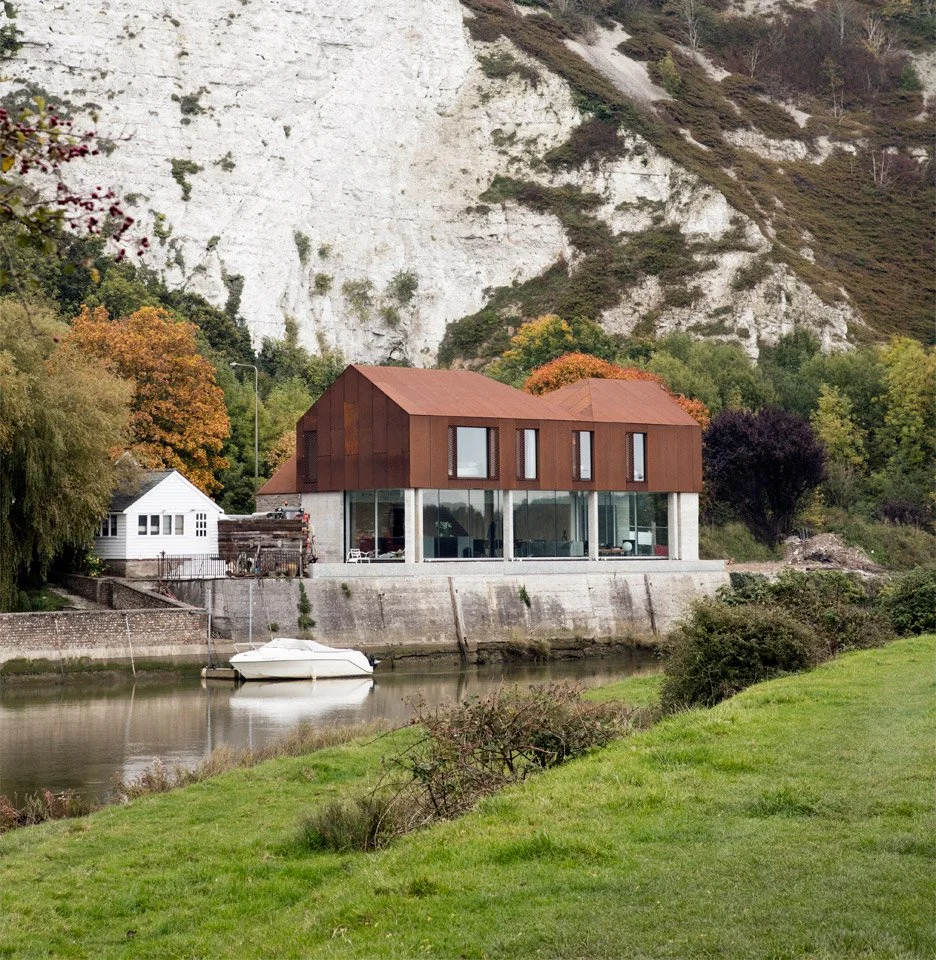
Alter Architects in Lewes
Looking for an architect in Lewes isn't like hiring one anywhere else in Britain. This medieval town, with its Norman castle perched above winding streets, presents unique challenges that can derail even the most straightforward renovation. Get it wrong, and you'll face rejected planning applications, costly redesigns, and delays stretching into years.
I've seen it happen too many times.
The average house price in Lewes hit £374,000 in June 2025, according to the Office for National Statistics. That's relatively flat compared to the previous year, but don't let that fool you into thinking the market's straightforward. Home-movers paid an average of £452,000, whilst first-time buyers scraped together £300,000. In a town where 71.1% of households own their homes, property is a serious investment.
And that investment deserves an architect who actually understands Lewes.
What Makes Hiring an Architect in Lewes Different from Anywhere Else?
Lewes has over 1,100 post-medieval listed buildings, according to Historic England's timeline data. One thousand, one hundred. That's an extraordinary concentration of heritage assets for a town with a population of just 99,900 residents.
Here's what that means for you: conservation area regulations restrict what you can do with your property. Significantly. The Lewes District Council website explicitly states that "the amount of Permitted Development (work you can do without formal consent) may be reduced in conservation areas." Translation? That rear extension you're planning might need full planning permission, even though it wouldn't elsewhere.
Lewes Castle, one of only two castles in Britain with a double motte structure, dominates the skyline. The Norman fortification, built for William de Warenne shortly after 1066, isn't just a tourist attraction. It's a constant reminder that this town takes its history seriously. Very seriously.
The South Downs National Park adds another layer of complexity. Parts of Lewes District fall within the park boundary, where planning policies protect landscape character with an intensity that surprises people from other regions. Any application affecting heritage assets requires a Heritage Statement outlining potential impacts and mitigation measures.
An architect without local experience won't know this. They'll submit applications that get rejected immediately, costing you months of delays and thousands in redesign fees.
How Much Does an Architect Actually Cost in Lewes?
Let's talk money, because nobody else will give you straight answers.
Architectural fees in Lewes typically run 8-12% of construction costs for full services. That's design, planning applications, building regulations, and construction monitoring. For a £300,000 project—perhaps a substantial extension or a whole-house renovation—you're looking at £24,000 to £36,000 in professional fees.
Listed building projects push that higher, sometimes to 10-15%. Why? Because your architect needs to prepare Heritage Statements, consult with Historic England, and navigate the listed building consent process separately from planning permission. That's not double-dipping; it's genuinely additional work required by law.
Here's the uncomfortable truth: cheap architects cost more. I've watched homeowners hire cut-price practices only to face rejected applications, expensive appeals, and ultimately hiring a second architect to fix the mess. That "bargain" 5% fee ends up costing 20% once you factor in delays, resubmissions, and lost time.
Private rental in Lewes averaged £1,248 per month in July 2025 (ONS rental data), up from £1,234 the previous year. That 1.1% increase might seem modest, but it reflects a tight housing market where every month of project delay costs real money. If you're in rented accommodation whilst renovating your purchase, those delays add up fast.
The Lewes District Local Plan allocates sites for approximately 600 new homes in some developments, but with an estimated 800 homes still to be delivered by 2029/30 across the district, competition for good architects remains fierce. The best ones are busy. Book early.
Do You Actually Need Planning Permission for Your Lewes Property?
Yes. Probably.
Conservation area designation removes many permitted development rights. That means work you could do without permission elsewhere requires full planning applications in Lewes. Rear extensions, roof alterations, cladding changes, satellite dishes—all potentially need permission.
Lewes District Council's planning policy is explicit: "Designated areas, such as conservation areas, South Downs National Park, Sites of Specific Scientific Interest, Article 4 Directions and withdrawn permitted development rights can restrict the works you can carry out."
Listed building consent is separate and mandatory for any work affecting the special interest of a listed structure. Grade I buildings like Lewes Castle or the Ruins of Lewes Priory face the strictest scrutiny. But even Grade II properties—the vast majority of Lewes's 1,100+ listed buildings—require specialist consent.
Your architect should prepare a Heritage Statement for any application in a conservation area or affecting listed buildings. This isn't optional bureaucracy. It's a legal requirement that demonstrates you've considered heritage impact and minimised harm. Skip it, and your application gets rejected before the planning officer even reads your drawings.
Historic England maintains detailed records of Lewes's architectural heritage, including medieval structures like the timber-framed Medieval Hall in English Passage, built in the early 16th century. These buildings aren't museum pieces. People live and work in them. Your architect needs to understand how to adapt historic structures for modern use whilst respecting their significance.
The town timeline shows 151 medieval list entries (1066-1540) and those 1,104 post-medieval entries (1540-1901). Every era of British architecture is represented here. Georgian townhouses stand next to medieval halls. Victorian terraces abut Norman castle walls. It's architectural chaos, in the best possible way.
And it's why local knowledge matters.
What Questions Should You Ask Before Hiring an Architect in Lewes?
Start with the obvious: "How many projects have you completed in Lewes?"
If they hesitate, that's your answer. Local experience isn't optional; it's essential. An architect who's navigated Lewes District Council's planning processes knows which officers handle conservation areas, understands local interpretation of policy, and can anticipate objections before they derail your application.
Ask specifically: "Have you worked with Historic England on listed building applications?" Listed building consent requires statutory consultation with Historic England for significant alterations. An architect who's done this before knows what level of detail Historic England expects, which heritage assessments you'll need, and how to present proposals that satisfy both conservation principles and your practical needs.
Request examples: "Can you show me Heritage Statements you've prepared for Lewes projects?" Read them. Seriously. A good Heritage Statement balances historical analysis with pragmatic proposals for change. A poor one reads like a Wikipedia entry followed by "and we'd like to build an extension." You'll spot the difference immediately.
Query their broader knowledge: "What's your experience with South Downs National Park planning applications?" Even if your site isn't within the park, the landscape setting matters. Views towards the Downs, dark skies policies, and landscape character assessments affect applications across Lewes District.
Challenge them on specifics: "How do Lewes District Council's conservation policies differ from other authorities you've worked with?" Local Plan Part 2 sets out detailed policies guiding development to 2030. Your architect should reference specific policies relevant to your project, not generic platitudes about "respecting local character."
Don't forget the practical stuff: "What's your fee structure, and what's included?" Fixed fees or percentage of construction costs? Does the fee cover planning appeals if necessary? How many site visits during construction? What happens if the project goes over budget? Nail down these details before you sign anything.
How Long Does the Architectural Process Take in Lewes?
Longer than you think. Always.
Standard planning applications take eight weeks from validation to decision. But that's just the statutory period. Your architect needs time before submission to prepare drawings, Heritage Statements, and supporting documents. Expect 6-12 weeks of design development and documentation before you even submit.
Listed building consent adds another 8 weeks, running concurrently with planning but often requiring additional information that extends timelines. Historic England has 21 days to respond to statutory consultation. If they request changes or additional assessments, you're looking at resubmissions and further delays.
Conservation area applications in Lewes routinely take 12-16 weeks from initial instruction to decision. That's design, pre-application advice, application preparation, submission, and determination. Add another 2-4 weeks if the application goes to planning committee rather than being decided under delegated powers.
The Lewes District Local Plan is being updated, with a consultation running until 28 February 2025 on policy definitions and site allocations. Emerging policies can affect applications, particularly for larger developments. Your architect should track these changes and advise on potential impacts.
Building regulations approval adds another 4-8 weeks after planning permission. You can't start on site until you've got building regs approval or submitted a building notice. Most architects recommend the full plans route for complex projects, which takes longer but provides more certainty.
Census 2021 data shows Lewes's population grew just 2.5% between 2011 and 2021, reaching 99,900 residents. That's slower than the South East (7.5%) or England overall (6.6%). The median age rose to 48 years, substantially higher than England's 40 years. This is an ageing town with established communities who care deeply about local character. Expect neighbour objections on anything controversial.
Home ownership declined slightly from 72.7% to 71.1%, whilst private renting increased from 14.5% to 16.9%. More renters means more people with shorter-term stakes in the community, but also more people watching development closely because they feel less able to influence outcomes.
All of this affects your project timeline. Community consultation, neighbour engagement, and responding to planning objections take time. A good architect factors this in from the start.
What Are the Biggest Mistakes People Make When Hiring Architects in Lewes?
The biggest mistake? Choosing an architect without conservation area experience.
I can't stress this enough. Generic residential architects who specialise in contemporary new-builds will struggle with Lewes's heritage constraints. They'll propose solutions that work elsewhere but get rejected here. You'll waste months and thousands of pounds before realising you've hired the wrong person.
Second mistake: assuming national housebuilder standards apply. They don't. That double-storey rear extension popular in suburban Surrey? It might be too large, too high, or too modern in materials for Lewes's conservation areas. Your architect needs to understand local context, not import solutions from elsewhere.
Third mistake: skimping on pre-application advice. Lewes District Council offers pre-application services where planning officers review proposals before formal submission. This costs money—typically £150-£400 depending on scale—but it identifies problems early. Architects who skip this step to save you money often cost you far more in rejected applications.
Fourth mistake: ignoring neighbours. Conservation areas and listed building applications often attract objections from amenity societies, heritage groups, and concerned residents. Your architect should anticipate this and include neighbour consultation in their process. Addressing concerns proactively prevents objections becoming formal refusals.
Fifth mistake: unrealistic budgets. Building in conservation areas costs more. Period features need specialist repairs. Heritage materials cost more than modern alternatives. Listed building works require specialist contractors. Your architect should provide realistic cost estimates based on Lewes market rates, not national averages.
The Core Strategy for Lewes District sets the long-term spatial vision guiding development to 2030. It prioritises sustainable development whilst protecting heritage assets. Your architect should explain how your project aligns with strategic policies, not just site-specific constraints.
Lewes has two Special Areas of Conservation—Castle Hill and Lewes Downs—protected under Habitats Regulations. Whilst these lie outside the main plan area, they affect ecological assessments for developments. Your architect should know whether your project triggers habitat assessments.
Final mistake: rushing. Everything takes longer in Lewes. Heritage assessments, statutory consultations, committee decisions—all add time. Architects who promise quick turnarounds either don't understand local processes or are setting you up for disappointment.
Finding Your Architect in Lewes
Right. You've read this far, so you're serious about getting this right.
Start with the Royal Institute of British Architects (RIBA) client services, which maintain a directory of chartered practices. Filter by location and look for Lewes-based architects or those listing "conservation areas" and "listed buildings" as specialisms.
Check the local authority's recent planning decisions. Search for approved conservation area applications and note which architects submitted them. Success in Lewes is the best indicator of competence in Lewes.
Visit completed projects. Good architects will provide addresses of previous work (with client permission). Walk past. See how the extension relates to the original building. Check whether materials match. Judge whether the design respects local character whilst meeting modern needs.
Interview at least three practices. Compare their approaches, fees, and enthusiasm for your project. The best architects listen more than they talk. They ask about how you live, what you value, and what problems you're trying to solve. They don't immediately jump to solutions.
Request client references and actually call them. Ask about communication, budget management, and problem-solving when issues arose. Every project hits problems. How your architect handles them matters more than whether problems occur.
Verify insurance. All architects should carry professional indemnity insurance. Confirm cover levels are adequate for your project value. This protects you if something goes wrong.
The emerging Lewes Local Plan will guide development to 2040, setting frameworks for future planning decisions. Your architect should understand how emerging policies might affect your project, even if they're not yet adopted.
Lewes isn't an easy place to build. The heritage constraints are real. The planning process is complex. Neighbour scrutiny is intense. But that's precisely why the town remains so special. Those 1,100+ listed buildings, that double-motte Norman castle, those Georgian townhouses climbing the hill—they're still here because the planning system works.
Choose an architect who understands that. Who respects it. Who knows how to work with conservation constraints rather than against them.
Because getting it right doesn't just save you £50,000. It means your extension, your renovation, your new build becomes part of Lewes's continuing story. Another layer in a town that's been evolving for nearly a thousand years.
That's worth getting right.
Frequently Asked Questions
What makes hiring an architect in Lewes different from other areas?
Lewes has over 1,100 post-medieval listed buildings and strict conservation area regulations. The town's location within the South Downs National Park means planning applications face additional scrutiny. Architects need specialist knowledge of Historic England requirements and Lewes District Council's conservation policies.
How much does an architect cost in Lewes?
Architectural fees in Lewes typically range from 8-12% of construction costs for full services. Listed building projects may cost 10-15% due to additional heritage assessments and Historic England consultations. For a £300,000 project, expect architectural fees between £24,000-£36,000.
Do I need planning permission in Lewes conservation areas?
Yes, conservation area designation in Lewes significantly reduces permitted development rights. Even minor external alterations require planning permission. Listed building consent is separate and mandatory for any work affecting the special interest of listed structures.
How long does the planning process take in Lewes?
Standard planning applications take 8 weeks, but conservation area and listed building applications in Lewes often require 12-16 weeks due to statutory consultations with Historic England and heritage assessments required by Lewes District Council.