
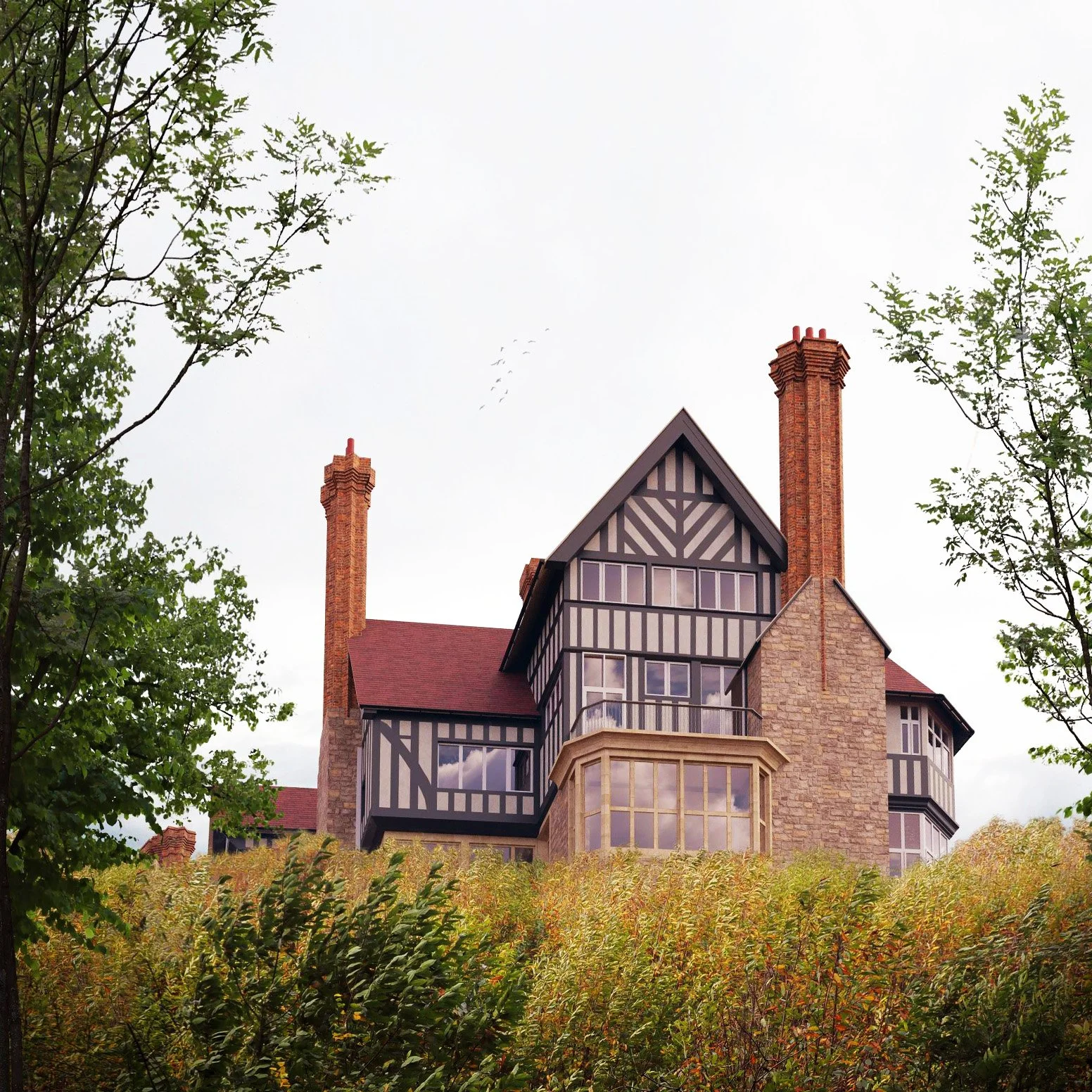
Architects in Alfriston: Designing Within a Medieval Masterpiece
Nestled in the South Downs, Alfriston isn't just another pretty village – it's a living museum where almost every street view carries centuries of accumulated character. Walk down the High Street and you're stepping past buildings that watched the Wars of the Roses unfold, framed by the Cuckmere Valley and the rolling chalk landscape of the National Park. The Old Clergy House dates to the 14th century and became the National Trust's first building purchase in 1896, a modest Wealden hall house rather than a grand rectory. St Andrew's Church, often called the "Cathedral of the South Downs", is Grade I listed and utterly outsized for a settlement of this scale, its cruciform plan and central tower dominating the village skyline. The Star Inn and other medieval inns on the High Street have been welcoming travellers for centuries, contributing to a streetscape where almost every intervention is scrutinised for its impact on heritage.
If you're planning building work here, you can't treat it like Crawley or Brighton. Alfriston demands something different – something considered, grounded in conservation practice, and aligned with the priorities of a National Park planning authority rather than a standard district council. The South Downs National Park Authority doesn't rubber-stamp applications; its policies prioritise conserving and enhancing the area's special architectural and historic interest, alongside nature recovery and climate change mitigation. Your architect needs to speak that language or you'll waste months on revisions, refusals, and avoidable redesigns.
This guide sets out what actually matters when you're hiring an architect in Alfriston: who the planning authority is, how conservation area and listed building controls work, why materials choices are critical, and which questions will quickly tell you whether an architect is genuinely equipped for this village.
Why you can't hire just any architect in Alfriston
Alfriston sits within a designated conservation area inside South Downs National Park, where the local authority has a statutory duty to identify and protect areas of special architectural or historic interest. This isn't a gentle suggestion about keeping things traditional; it's enforceable policy under the Planning (Listed Buildings and Conservation Areas) Act, implemented through adopted guidance and the South Downs Local Plan. The 2015 Alfriston Conservation Area Appraisal and Management Plan maps the village in detail, identifying key views, characteristic materials, historic plot structures, and specific buildings and spaces that define its special character. Timber-framed buildings, knapped flint walls, thatched roofs, and narrow medieval burgage plots are not atmospheric extras – they're the baseline context against which proposals are judged.
Within this framework, permitted development rights – those automatic permissions most homeowners in England enjoy – are explicitly described as "modestly constrained" in the conservation area, meaning some works that would usually bypass planning consent here require formal applications. Even seemingly minor actions, such as demolishing a boundary wall or removing a tree, can trigger planning controls or conservation area notifications; tree works typically require six weeks' written notice and may result in a Tree Preservation Order. Standard residential architects who mainly produce suburban extensions are rarely dealing with such tight constraints, or with the level of justification and evidencing expected in this setting.
In practice, Alfriston requires an architect who's comfortable working within a heritage-led regulatory environment: someone who understands how significance is assessed, how harm and enhancement are weighed, and how to structure design statements and supporting documents so that conservation officers have confidence in what they're seeing. That usually means prior experience with Listed Building Consent, familiarity with conservation area appraisals, and a track record of negotiating with conservation teams.
Who actually handles planning applications in Alfriston?
A frequent and costly misunderstanding is assuming that Wealden District Council deals with planning in Alfriston. In reality, South Downs National Park Authority (SDNPA) is the local planning authority for the village, meaning applications are submitted to and determined by the National Park rather than the district. When the National Park came into being, it took over planning functions from constituent authorities for land within its boundary, and the Alfriston Conservation Area Appraisal explicitly notes that SDNPA is now the relevant planning body.
The South Downs Local Plan 2014–2033, currently under review to 2042, sets out the strategic policies that shape decisions here, including a strong emphasis on conserving and enhancing landscape character, responding to climate change, supporting nature recovery, and protecting heritage assets. Proposals in Alfriston are assessed against these National Park–specific objectives rather than a generic district-level plan, which shifts the questions planning officers ask about design, materials, scale, and environmental performance. For example, schemes are scrutinised for their impact on the National Park's special qualities, including views, tranquillity, dark skies, and cultural heritage, not just their immediate effect on neighbours.
If an architect tells you they'll be lodging your application through a Wealden District Council portal, they're working from the wrong playbook. The correct planning portal sits on the SDNPA website, and the authority has its own validation requirements, guidance notes, and pre-application processes. Architects who regularly work in the South Downs will already be familiar with these systems, and may also have an established professional rapport with individual planning and conservation officers, which can smooth the path from concept through to approval.
How many listed buildings are in Alfriston – and why that matters
For a settlement of its size, Alfriston has a striking concentration of listed buildings, reflecting centuries of continuous occupation and architectural layering. Historic England's National Heritage List records multiple entries in and around the village, spanning Grades I, II* and II, as well as a Scheduled Monument. At the top of the hierarchy sits St Andrew's Church, a Grade I listed parish church dating from the 14th century and renowned for its cruciform plan, central tower, and commanding position on the Tye. This is the building that underpins the "Cathedral of the Downs" nickname often attached to Alfriston.
The Old Clergy House – officially The Old Clergy House on the listing – is Grade II* and holds a special place in heritage history as the National Trust's first-ever acquisition, purchased in 1896 for £10. It's a 14th-century timber-framed Wealden hall house with later alterations, characterised by its thatched roof, modest scale, and internal features such as moulded beams and historic finishes. The Star Inn, another Grade II* structure, also traces its origins to the medieval period, representing the tradition of substantial roadside inns along major routes. Surrounding these are numerous Grade II buildings – including houses, inns, shops and outbuildings – that collectively create the tightly knit historic fabric along the High Street and around the Tye.
Beyond the built-up core, the Scheduled Monument of Long Burgh Long Barrow brings even earlier archaeology into the planning equation, reminding applicants that the landscape contains prehistoric as well as medieval significance. For properties on the National Heritage List, any works that affect their special architectural or historic interest require Listed Building Consent in addition to ordinary planning permission, and it's a criminal offence to carry out such works without that consent. Architects working in Alfriston therefore need to be able to prepare or coordinate heritage statements, significance assessments, and detailed justifications for interventions, rather than treating heritage as an afterthought.
What the local housing market means for renovation decisions
Understanding the economics of Wealden's housing market helps calibrate how far to push a project budget in Alfriston. The UK House Price Index for England records that the average property price in Wealden in September 2025 stood at about £400,656, representing a 1.1% fall from approximately £404,915 a year earlier. That slight decline sits against a longer-term picture in which prices remain relatively high by national standards, reflecting the district's rural attractiveness and proximity to both the coast and commuter routes. Detailed Office for National Statistics visualisations for Wealden show average prices around the low £400,000s in 2025, with first-time buyers paying a lower average and home-movers paying significantly more.
Other market data sources suggest that sold prices in Wealden have hovered in the high £400,000s, with some evidence of softening in the previous 12 months. On the rental side, official statistics indicate continued upward pressure on private rents, which bolsters the case for quality refurbishment in desirable locations even during flatter periods for capital values. While these figures apply at district level rather than to Alfriston specifically, they set a backdrop for conversations about value uplift: investing six-figure sums into a listed house extension may still be sensible where demand for characterful, well-located homes remains robust.
An architect who understands this context can help you avoid overcapitalising – specifying a scheme whose cost is out of step with what the market will tolerate – while also identifying opportunities where sensitive improvements could materially enhance both liveability and resale value. In a village where planning and construction can be more expensive due to heritage constraints, that balance between ambition and prudence becomes especially important.
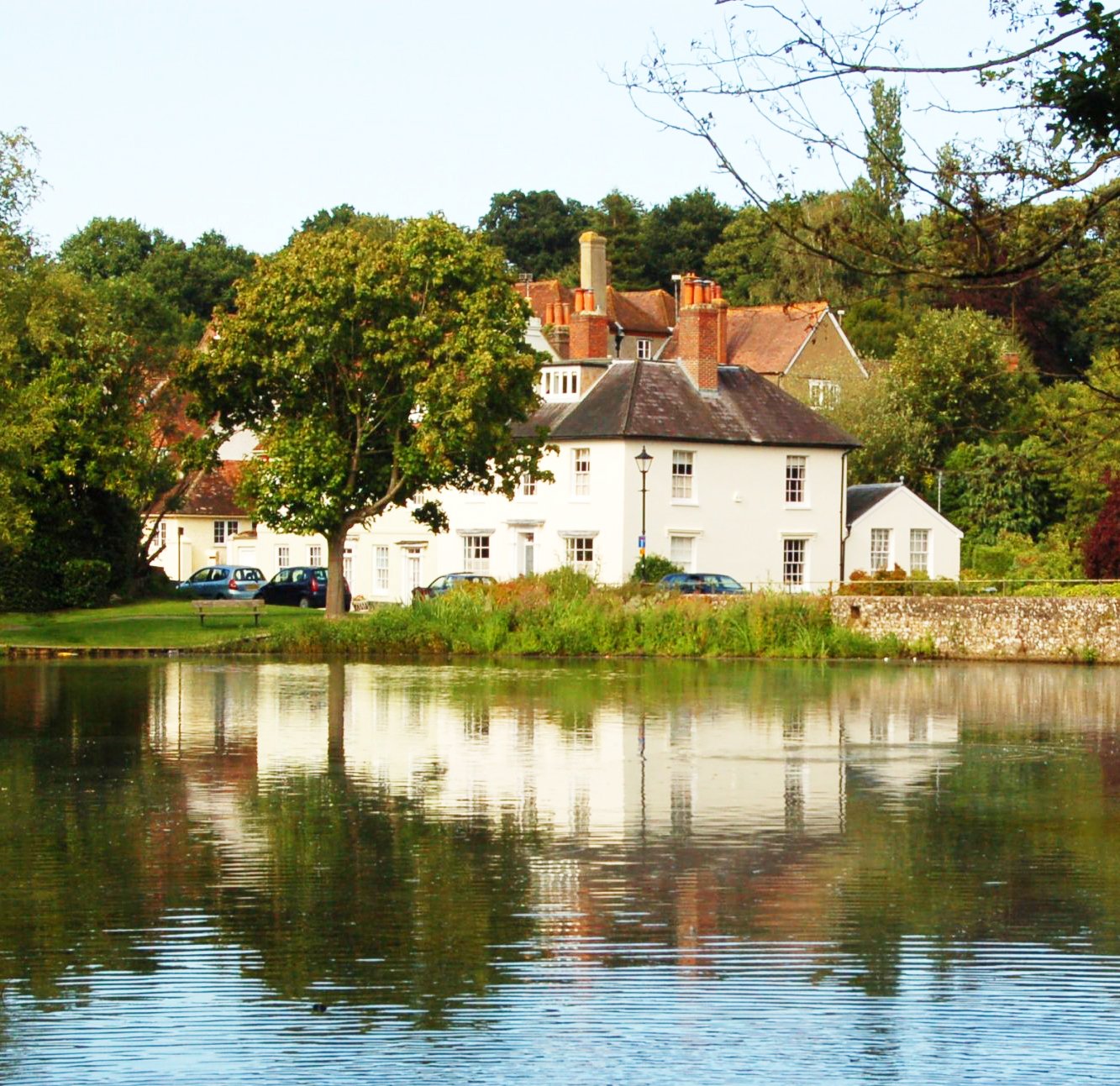
Why materials choices are critical in Alfriston
One of the clearest messages in the Alfriston Conservation Area Appraisal is that the village's character is inseparable from its materials palette. Knapped flint, laid with care to expose a fresh, light-catching face, appears extensively in boundary walls, churches, and dwellings, providing a distinctive texture that shifts under changing light. Local stone, brick, tile, and timber are used in combinations that reflect both functional requirements and regional tradition, while thatched roofs, clay tiles, and handmade brick chimneys contribute to the village's silhouette. When new work introduces discordant materials, it immediately reads as alien in this context.
Historic roofing at St Andrew's Church illustrates how performance and authenticity can be balanced: although stone slates were historically used, practical considerations and later interventions saw clay tiles adopted to address issues such as weight and durability. Modern conservation practice often follows a similar logic – favouring materials that are technically appropriate and visually sympathetic, even if they're not exact replicas of earlier fabric. Lime-based mortars and renders, for example, are preferred over hard cement in traditional masonry because they allow buildings to breathe, reduce moisture entrapment, and are more compatible with historic substrates. Conservation officers are quick to challenge cementitious repairs or over-smooth finishes that undermine both performance and character.
Windows are another flashpoint. The conservation area guidance stresses the importance of traditional proportions, glazing patterns and frame profiles; substituting thick, modern uPVC sections for slender timber sashes can be enough to tip an otherwise acceptable proposal into refusal. Specialist slim-profile double-glazing systems and well-detailed timber frames can reconcile energy performance with visual integrity, but they add complexity and cost to design and specification. An architect used to conservation work will anticipate these issues, frame them correctly in design and access statements, and ensure that every material choice is justified against both heritage guidance and modern building standards.
Five questions to ask any architect you're considering
You don't need technical training to interview architects effectively. A handful of well-chosen questions will quickly reveal who understands Alfriston and who doesn't.
"Which planning authority handles applications in Alfriston?"
The correct answer is South Downs National Park Authority, not Wealden District Council; any confusion here indicates a lack of basic local knowledge."Can you show me three conservation area projects you've completed?"
Ask to see built work within conservation areas or involving listed buildings, ideally with evidence that approvals were granted without repeated refusals or appeals."What's your approach to Listed Building Consent applications?"
Strong candidates will talk about assessing significance, preparing heritage impact statements, engaging with conservation officers, and, where needed, collaborating with specialist heritage consultants."Do you conduct measured building surveys in-house?"
Historic structures often have irregular geometry, so precise surveying – whether undertaken by the practice or by a trusted specialist – is essential to avoid costly misfits during construction."What's your relationship with local conservation officers?"
Architects who regularly work within South Downs National Park are likely to have an established professional rapport with officers, understand their expectations, and know when pre-application discussions will add value.
Pay attention not only to content but to tone; architects who dismiss conservation concerns or minimise the importance of planning strategy are unlikely to thrive in Alfriston's regulatory environment.
Can you still build new homes in Alfriston?
New housing within protected landscapes is tightly controlled, and the South Downs Local Plan reflects this by setting a modest overall housing target for the entire National Park rather than encouraging large-scale growth in individual settlements. The plan proposes around 4,500 new homes across all its constituent counties over the plan period, with a strong focus on directing development to the most suitable locations and prioritising brownfield land where possible. For places like Alfriston, that translates into very limited capacity for new residential sites, especially within the conservation area boundary.
Any proposal for a new dwelling here has to demonstrate not only that it meets housing need but that it positively enhances the character and appearance of both the conservation area and the wider National Park. That means responding to historic plot patterns, respecting key views to assets such as St Andrew's Church and the Tye, and using a materials palette and massing strategy that read as a thoughtful continuation of the village's story rather than an abrupt insertion. Experience from similar National Park contexts shows that successful schemes tend to involve extensive design refinement, stakeholder engagement, and high-quality materials, while volume-housebuilder solutions with standardised house types tend to fare poorly.
For most owners and investors, the more realistic opportunities in Alfriston lie in adapting and extending existing buildings – improving thermal performance, rationalising internal layouts, and adding modest, well-designed extensions where heritage and planning constraints allow. These projects can still be ambitious, but their starting point is a fabric and streetscape that's already valued and protected at national level.
Frequently asked questions
Do I need a specialist architect for work in Alfriston's conservation area?
Yes. Alfriston lies within a conservation area designated for its special architectural and historic interest and is managed by South Downs National Park Authority, which applies policies that specifically constrain permitted development and control demolition. A specialist architect familiar with conservation practice and SDNPA policy can design schemes that respect the village's medieval character while guiding you through a more complex approval process than in a typical suburban location.
Which authority handles planning applications in Alfriston?
South Downs National Park Authority is the local planning authority for Alfriston, not Wealden District Council, meaning all planning and Listed Building Consent applications are determined under the South Downs Local Plan rather than a district plan. Using the correct authority's policies, validation checklists and online portal is essential to avoid invalid submissions, delays and misunderstandings about what officers will expect from your proposal.
Can I extend my listed building in Alfriston?
In principle, yes, but you'll need Listed Building Consent as well as planning permission for works that affect a listed building's character as a building of special architectural or historic interest. With high-profile assets such as St Andrew's Church (Grade I) and The Old Clergy House and The Star Inn (both Grade II*) setting the tone, the bar for demonstrating that proposals preserve or enhance significance is high. A well-prepared application will usually include a heritage statement, significance assessment, and detailed justification of how the extension's design, materials and junctions respond sensitively to the original fabric.
What makes Alfriston different from other East Sussex villages for architects?
Alfriston combines an unusually dense cluster of late-medieval and early-modern buildings with National Park status and the presence of England's first National Trust property, giving it both national heritage prominence and a landscape protection overlay. The conservation area appraisal emphasises the importance of knapped flint walls, timber framing, traditional roofing, and historic plot structures, making unsympathetic or generic design moves particularly conspicuous. Architects here must navigate not only local heritage guidance but also the broader purposes and special qualities of South Downs National Park, which adds layers of policy consideration beyond those in many other East Sussex villages.
Alfriston rewards specialist knowledge and punishes shortcuts. You could appoint an architect who's never worked in a conservation area, let alone a National Park, and watch them learn the hard way as SDNPA issues refusals, requests for redesign, and demands for more robust heritage justification. Or you can choose someone who already understands the conservation area appraisal, knows how to prepare a persuasive Listed Building Consent package, and treats materials specification as a core part of design rather than a bolt-on.
When you're interviewing practices, look for evidence that they grasp the interplay between heritage, planning policy, and market reality in this part of East Sussex. Check their conservation portfolio, confirm that they regularly work with South Downs National Park Authority, and ask directly about how they handle significance assessments and engagement with conservation officers. Alfriston has outlasted plague, war and economic upheaval; any new work you commission will sit alongside buildings that have stood for centuries, so it's worth ensuring your architect is equipped to make that contribution count.